
The Sad State of Baby Formula in America & A Healthier Alternative
posted on
January 18, 2025
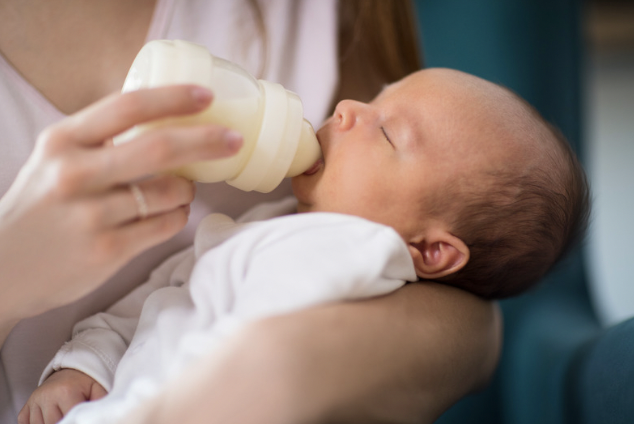
As a mother of five, I’ve navigated the challenges of feeding my babies in many ways. My journey has been unique with each child, and I’ve learned a lot along the way. Unfortunately, due to medical reasons, I wasn’t able to breastfeed all of my children, and like many other parents, I turned to formula. But what I found in the baby formula aisle disturbed me deeply. Most of the popular brands on the market today are filled with harmful ingredients, including highly processed seed oils, sugars, and additives that have no place in a newborn’s delicate digestive system.
The baby formula industry in the United States has a long way to go in terms of providing safe, nourishing options for our little ones. After doing extensive research and seeking out better options, I discovered the Weston A. Price Foundation's homemade baby formula recipe. I have used this formula for most of my children with 100% success, and I want to share my experience with you.
My Personal Experience with Feeding My Babies
With my first, he was born at 31 weeks, weighing just 2 lbs, and was in the NICU for 32 days. Because he was so premature, I had to pump breastmilk and freeze it for him when he came home. In fact, by the time he was discharged from the hospital, I had enough stored breastmilk that I was able to bottle-feed him for the first six months of his life. He did, however, need to be on a fortified formula to help him gain weight more quickly, but unfortunately, that wreaked havoc on his little digestive system.
With my second, I tried to breastfeed, but due to unfortunate circumstances, I wasn’t able to continue. We switched her to formula, and that's when our journey with raw milk actually began. It was during this time we discovered that she had severe allergies to many things, including dairy. Dairy caused horrific digestive issues as well as debilitating eczema rashes across her entire body. We started researching holistic options and, by the time she was around 8-9 months old, we switched her to raw milk formula (using the Weston A. Price recipe). At one year old, we transitioned her directly to A2 raw milk with absolutely no dairy allergy issues.
With my third, I was able to breastfeed him for 9 months, after which we transitioned him directly to A2 raw milk with no issues.
Between my third and fourth babies, I had a complete breast reduction which left me unable to produce any breastmilk, as the ducts were completely severed.
For my fourth and fifth babies, I used 100% donor breastmilk until they were each 10 months old. Then, we switched them straight to A2 raw milk.
With our sixth, I am once again planning to use donor breastmilk for as long as I can find it. If I need to use something other than human breastmilk, I will go back to the Weston A. Price raw milk formula recipe until at least 10 months old, at which point we will transition to A2 raw milk.
Over the past 15 years of providing raw milk to families, we've had the privilege of helping hundreds of parents use our raw milk to make the Weston A. Price raw milk formula recipe for their babies, from newborns to toddlers.
The Weston A. Price Foundation’s Baby Formula Recipe
The Weston A. Price Foundation, known for its advocacy of traditional diets and holistic health, has created a homemade baby formula that I personally recommend. The recipe uses nourishing whole foods like raw milk, high-quality fats, and other ingredients that are far more beneficial for your baby’s growth and development than the processed formulas on the market.
I’ve personally made this formula for my babies, and it has worked wonderfully. The beauty of this recipe is that it’s easy to prepare, and it provides a far more natural and nutritious alternative to store-bought formula. In my experience, my babies thrived on it, with none of the digestive issues or fussiness that are often associated with commercial formulas.
You can find the Weston A. Price Foundation’s baby formula recipe here.
Why Raw Milk?
There’s a lot of fear around feeding raw dairy to babies, as well as to pregnant women. But here's the thing: breast milk is raw milk! Humans have been consuming raw milk for centuries, long before the industrial revolution and pasteurization became common practice. Our ancestors did not have the luxury of pasteurized milk, and yet, they thrived.
The main difference between raw and pasteurized milk is the preservation of nutrients. Raw milk contains enzymes and beneficial bacteria that are destroyed during pasteurization. These elements help with digestion and support the immune system, which is crucial for a growing baby. That’s why I trust raw milk from local, reputable sources like CT Ranch, where we prioritize the health and well-being of our animals and their milk.
Where to Find Raw Milk
If you’re interested in giving your baby the nourishment they deserve, you can purchase raw milk directly from us at CT Ranch. We believe in providing families with the highest quality milk, free of additives or processing, to help you make the healthiest choices for your little ones.
Click here to buy raw milk at CT Ranch.
I hope this newsletter helps to inform and inspire other parents who might be in the same position I was: looking for a better, more natural way to feed their babies. While commercial formulas often fall short, there are healthier alternatives out there—like the Weston A. Price homemade formula recipe. Don't be afraid to seek out nourishing, whole food options for your children. They deserve the best!
Wishing you all health and happiness,
Nicole


